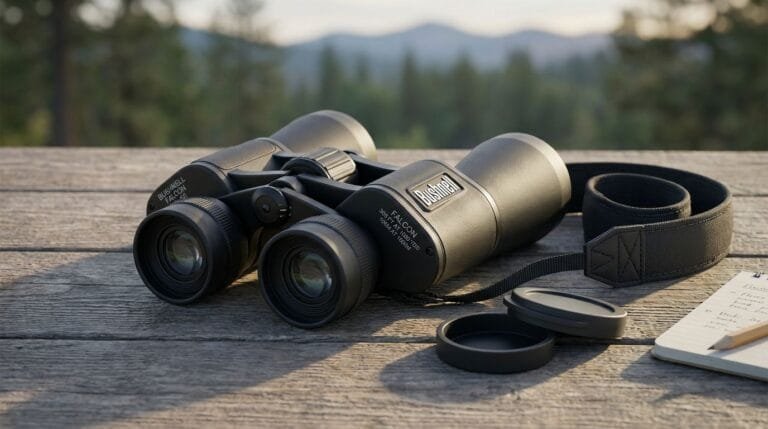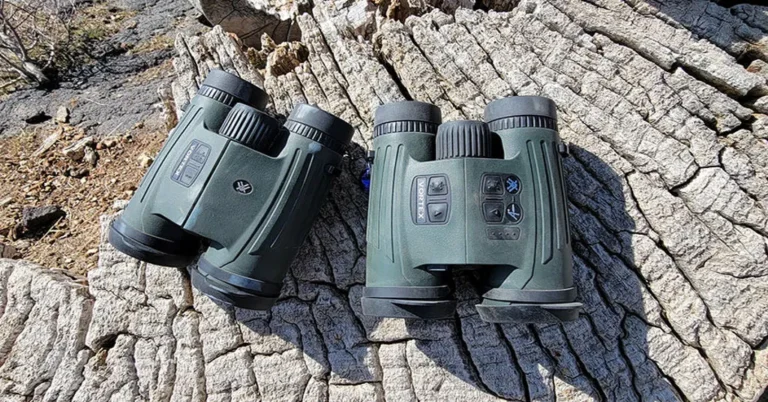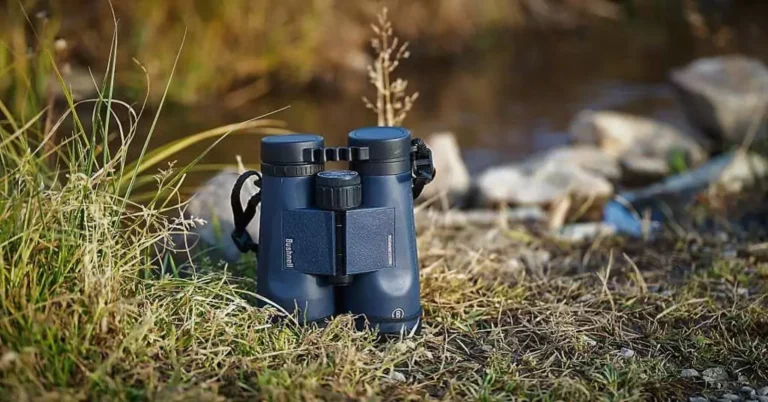

Technically yes, practically it is awkward. A telescope works with one eye, shows a narrow, high-magnification view that is upside down or mirror-flipped on most designs, and needs a mount to hold it steady. Binoculars use both eyes, give a wide, correct-orientation view at low magnification, and work handheld. So a telescope can do a binocular’s job for a still, distant target on a tripod, but for scanning birds, boats or landscapes, binoculars win every time. This guide compares the two honestly so you know what each is really for.
| Aspect | Telescope | Binoculars |
|---|---|---|
| Eyes used | One eye | Both eyes, more natural and less tiring |
| Image orientation | Upside down or mirror-flipped (depends on design) | Correct way up and correct left-right |
| Field of view | Narrow, high magnification | Wide, low to moderate magnification |
| Holding | Needs a mount or tripod | Handheld |
| Best at | Moon, planets, faint deep-sky detail | Scanning, birds, boats, travel, quick looks |
Can Telescopes Be Used as Binoculars?
Technically yes – practically, it’s awkward: one eye, narrow field, shaky without a tripod, upside-down image. For birding or sports, real binoculars win. Compare telescopes vs binoculars, see daytime telescope use, or browse the best astronomy binoculars. Technique: Sky & Telescope.
Telescopes vs. Binoculars Designed for Different Jobs
A brief primer is in order before we can answer the burning question. Telescopes and binoculars are both tools for visual enlargement, but their designs stem from different philosophies of observation.
Telescopes
Maturely crafted telescopes are designed with precision to capture and magnify the awe-inspiring beauty of celestial bodies. With their exceptional ability to gather light, they unveil the intricate details of planets and stars, offering a glimpse into the vastness of the universe. The singular eyepiece design of a telescope enhances the observer’s connection to the cosmos and echoes the contemplative spirits of historical figures like Copernicus and Galileo. These pioneers utilized telescopes to challenge conventional beliefs and unlock the mysteries of our cosmic existence.
Binoculars
In contrast, binoculars stand out as the friendly extroverts of the optics world. Picture a pair of binoculars with double barrels – a design that symbolizes its commitment to fostering a shared experience between you and the world around you. Their moderate magnification power sets binoculars apart, not just for observation but also for smoothly tracking and panning across vast landscapes, making every detail easily accessible and enhancing your overall viewing experience.
Using a Telescope on Land: The Adjustments
In specific scenarios, it is possible to flip the script and use a telescope for terrestrial observation. However, it comes with caveats that can temper the initial excitement.
Holding Steady
Telescopes, especially those with considerable magnification, can be hefty, making them a challenge to hold steadily. The high magnification that makes them focused on distant galaxies can work against you on Earth’s surface, where every tremor is magnified.
The Moving Target
Nature, in all its glory, rarely stands still for a portrait. With their wide field of view, Binoculars are ideal for tracking fast-moving subjects, such as an eagle on the wing. A telescope’s narrower focus is less forgiving, requiring the observer to predict and pre-plan their targets more effectively.
Eye Comfort: One Eye Versus Two
Employing a telescope with both eyes may prove less comfortable than the ergonomic design of binoculars. The angle and alignment of the eyepiece column often skew towards single-eyed observation, requiring a degree of biomechanical contortion that may not be sustainable for extended use.
Can You Use a Telescope Like Binoculars?

Despite its inherent challenges, there are moments when a telescope can outshine binoculars in terrestrial tasks.
Distance Viewing
Telescopes are paragons of distance viewing, capable of resolving finer detail on objects that are truly far away. Whether studying the craggy abode of a mountaintop hermit or simply keeping an eye on a distant ship at sea, the telescope’s precise focus can deliver where binoculars may fall short.
Perfectly Still
The telescope’s high magnification is an advantage for stationary or slow-moving objects. The ability to maintain a perfectly still gaze and watch events unfold with an almost cinematic clarity marks the telescope as a powerful tool for environmental study.
When a Telescope Does Work on Land
In the repeatability of day-to-day use, binoculars often land on the side of practicality and universal fit.
Watching Wildlife and Water
The versatility of binoculars in capturing the grand sweep of nature-from scanning coastlines for humpback whales to exploring the canvas of the sky during the day-makes it an appealing choice for the spontaneous voyeur.
Ease of Use
Lighter and designed to be held comfortably with both eyes, binoculars become an extension of the observer, not a distraction. Their user-friendly nature allows anyone to pick them up and appreciate the world in triumphantly scaled detail.
How to Choose Between Them
Ultimately, whether it’s to the ends of the universe or the furthest stretch of land, the instrument of choice comes down to your specific needs.
Where a Telescope Wins
For those dedicated to exploration and the discerning eye, the telescope will always hold a place of reverence. Its solemn, focused offering is a siren song for those seeking to understand and connect with the vast mysteries above.
Where Binoculars Win
Yet, for the everyday observer who wishes to consume the breadth and depth of each moment, from the mundane to the majestic, it’s the binocular that’s poised to deliver. Its inclusive, panoramic view beckons the multi-faceted soul in us all, insistent on absorbing life in all its forms.
Conclusion
And for those who refuse to be bound by convention, a hybrid approach may be the answer. Spotting scopes, leaning towards the telescope’s might, can bridge the gap, providing astronomical allure under the sun’s golden gaze.
In the grand dance of observation, telescopes and binoculars offer a partner. Whether they waltz across the velvet carpet of the night sky or tango through the sunlit dapples of earthly domains, they do so with their unique styles and strengths. By understanding the nuances of each, we can tailor our pursuit of the unseen, the untouched, and the unexplored, ensuring that we not only see the world anew but that, in the reflections of our lenses, the world may see us as well.
FAQs
Which is better for stargazing, telescopes or binoculars?
Telescopes are generally considered to be better for stargazing due to their higher magnification power and specialized features such as tracking mounts. However, binoculars can also provide a unique and immersive viewing experience of the night sky.
Can I use a telescope for birdwatching?
While it is possible to use a telescope for birdwatching, the high magnification and narrow field of view may make it challenging to track fast-moving birds. Binoculars are generally a better choice for this activity.
Are binoculars or telescopes more expensive?
The cost of binoculars and telescopes can vary greatly depending on their features, size, and brand. In general, telescopes tend to be more expensive due to their specialized use for astronomical observation.
Can I use my binoculars to look at the sun?
It is not safe to look directly at the sun with any type of optical instrument, including binoculars. Doing so can cause permanent damage to your eyes. If you wish to observe the sun, make sure to use specialized solar filters or projection methods designed for safe viewing. So, always be cautious while observing celestial objects with optical instruments.
Can I use a telescope like binoculars?
Technically yes, but only in a limited way. A telescope uses one eye, gives a narrow, high-magnification view, and needs a mount to hold it steady, so it does not replace binoculars for handheld scanning. It can work like binoculars for a still, distant target on a tripod, but for birds, boats or quick looks, binoculars win.
Last updated: September 2026.

Written by Mark Stellan
Mark Stellan is Telescope Trove’s binoculars and optics specialist. He tests stargazing, birding and travel binoculars in the field – judging optical clarity, comfort and build quality – so readers know exactly what they’re getting before they buy. His guides cut through marketing specs to what actually matters under the night sky.
Telescope Trove – The Wikipedia of Telescopes · More articles by Mark