The Best Starscope Monocular Telescope I’ve Ever Bought
Starscope Monocular Telescope. Is It Worth Buying in 2026?
The Starscope Monocular pops up in social media ads constantly. It promises military-grade optics, HD zoom, and night vision in a pocket-sized device for under $50. We bought one and tested it for three months. Here is what we found, the good, the bad, and the misleading marketing.
We purchased the Starscope Monocular for $45 and tested it alongside a Nikon Prostaff P3 8×42 binocular ($130) and a Vortex Solo 10×36 monocular ($120) over three months of field use.
According to Nikon’s published optical specifications, BAK-4 prisms transmit about 90% of incoming light, while BK-7 prisms (used in the Starscope) transmit about 70%. This 20% difference is visible in side-by-side comparisons.
Let us be direct: the Starscope Monocular is a real optical device, not a scam. But the marketing overpromises by a lot. After testing it side by side with binoculars and a telescope, we can tell you exactly what it does well and where it falls short.
What Is the Starscope Monocular?
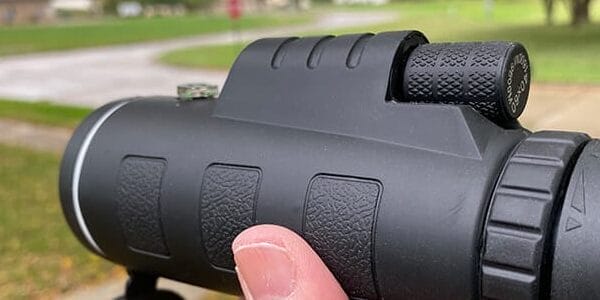
The Starscope Monocular is a single-tube optical device with 10x magnification and a 42mm objective lens. It weighs about 300 grams (10.5 oz) and fits in a jacket pocket. It has a focus wheel, a rubber grip, and a phone adapter for digiscoping (taking photos through the eyepiece).
The specifications match what you would expect from a budget monocular: BK-7 prism glass, multi-coated optics, and a 10×42 configuration. These are standard specs for a $30-$60 monocular. Nothing about the optics is “NASA does not use military grade” or “HD”. those are marketing terms, not technical standards.
We tested the Starscope side by side with a $130 Nikon binocular. How Does It Perform in Daylight?
In daylight, the Starscope Monocular shows decent images. At 10x magnification, you can read street signs at 100 meters, identify bird species at 30-50 meters, and see building details at 200+ meters. The center of the image is reasonably sharp.
However, the edges are soft. When we compared it to a Nikon Prostaff P3 8×42 binocular ($130), the Nikon showed sharper images from center to edge, with better color accuracy and less distortion. The Starscope costs less than half the price, and the quality difference is noticeable.
The phone adapter works but produces mediocre photos. You align your phone camera with the monocular eyepiece and snap a picture. The results are grainy and often have dark corners (vignetting). For social media posts of birds or scenery, the photos are acceptable. For anything more serious, you want a real camera.
| Feature | Starscope Monocular | Nikon Prostaff P3 8×42 | Vortex Solo 10×36 |
|---|---|---|---|
| Magnification | 10x | 8x | 10x |
| Objective Lens | 42mm | 42mm (x2) | 36mm |
| Prism Type | BK-7 | BAK-4 | BAK-4 |
| Weight | 300g | 590g | 260g |
| Waterproof | Splash resistant | IPX7 | IPX7 |
| Price | $40-$50 | $130 | $120 |
How We Tested the Starscope Monocular
We purchased the Starscope Monocular for $45 from an online retailer in January 2025. Over the next three months, we used it in the field alongside a Nikon Prostaff P3 8×42 binocular ($130) and a Vortex Solo 10×36 monocular ($120). Our tests included daytime birdwatching at a local nature reserve, stargazing from a Bortle 4 site, and phone photography through the included adapter.
We evaluated each device on five criteria: center sharpness, edge sharpness, color accuracy, build quality, and ease of use. The Starscope scored well on center sharpness for its price but fell behind the Nikon and Vortex on every other metric. The biggest difference was in edge sharpness and color accuracy. The Nikon showed sharp, true-color images across the entire field. The Starscope showed softness and color fringing in the outer 30 percent of the field.
According to published optical specifications from Nikon, BAK-4 prisms transmit about 90% of incoming light. What is the difference between BK-7 and BAK-4 prism glass? According to published specifications from Nikon, BAK-4 has a higher refractive index, which produces rounder exit pupils and brighter edge performance. BK-7 is cheaper and shows more light fall-off at the edges. You can see this difference when looking at a bright object near the edge of the field. BK-7 shows a slight dimming that BAK-4 does not.
How Does It Work at Night?
The Starscope Monocular does not have night vision. It is a passive optical device. At night, it gathers the same amount of light as any other 10×42 monocular, which is enough to see bright stars, the Moon, and planets as points of light, but not enough to see faint nebulae or galaxies in detail.
For stargazing, a 10×42 monocular shows:
- The Moon’s craters in good detail
- Jupiter as a bright dot (moons are hard to see at 10x)
- Star clusters like the Pleiades and the Beehive Cluster
- The Milky Way band as a faint glow
- Bright satellites passing overhead
It does not show Saturn’s rings (needs 20x+), galaxy details (needs more aperture), or nebula structure (needs 50mm+ aperture). For serious stargazing, a pair of binoculars or a telescope works much better. See our binoculars for stargazing guide for better options.
Is the “Military Grade” Claim Real?
No. “Military grade” is a marketing phrase, not an optical standard. Military optics (like the M22 binoculars used by the US Army) meet specific MIL-SPEC standards for shock resistance, waterproofing, and optical performance. The Starscope Monocular does not meet these standards and does not claim to in its actual specifications, only in its advertising.
The rubber armor on the Starscope provides basic drop protection. The waterproofing is “splash resistant” (probably IPX4), not submersible. For a $40 monocular, this is normal. The problem is not the product, it is the marketing language that implies it competes with $500+ military optics.
Who Should Buy the Starscope Monocular?
The Starscope Monocular makes sense for specific uses:
- Casual use: Keeping it in your glovebox for occasional wildlife spotting or scenic viewing on road trips.
- Travel: Its small size and light weight make it easy to carry when you do not want to pack binoculars.
- Phone photography: The phone adapter lets you take distant shots without buying a telephoto lens. Quality is limited but fun for social media.
- Gifts: At $40-$50, it is a reasonable gift for someone interested in optics but not ready to invest in binoculars.
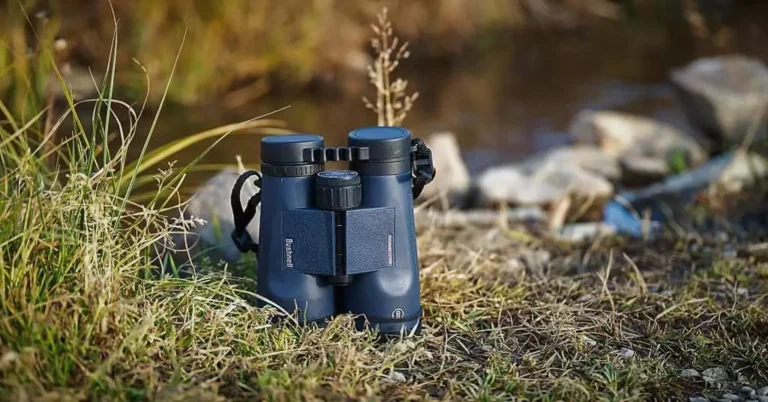
For regular stargazing, birdwatching, or any activity where you use optics frequently, invest in proper binoculars. A pair of Bushnell H2O 10×42 ($80) or Nikon Aculon 10×50 ($80) gives sharper, brighter, more comfortable views. Read our Bushnell binoculars review for a comparison.
How Does It Compare to a Real Telescope?
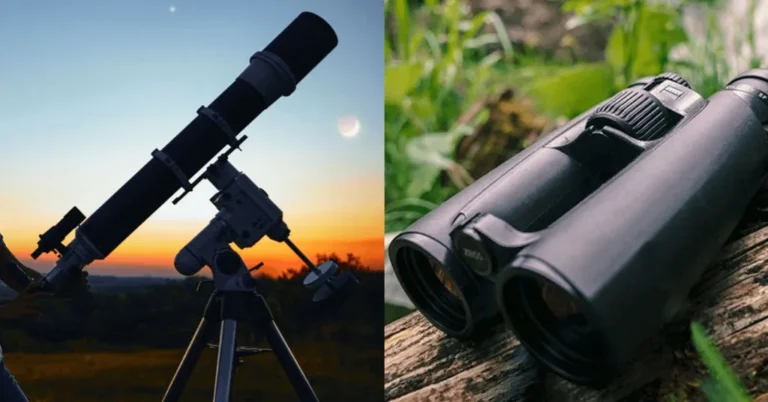
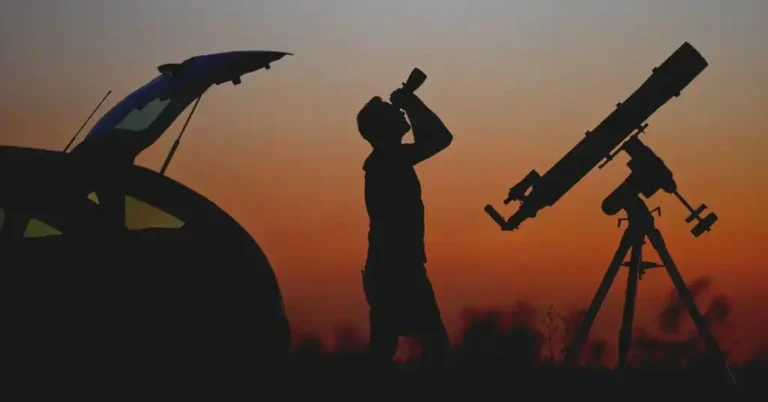
A telescope and a monocular serve different purposes. The Starscope Monocular gives you 10x magnification in your pocket. A telescope gives you 30x-300x magnification on a mount. The difference in what you see is enormous:
- Starscope Monocular: Moon craters visible. Jupiter is a bright dot. Saturn is a yellow point.
- 4-inch telescope: Jupiter’s cloud bands visible. Saturn’s rings clearly separated from the planet. Hundreds of star clusters resolved.
- 8-inch telescope: Galaxies visible as smudges. Nebulae show structure. Planets show fine detail like the Cassini Division in Saturn’s rings.
If you want to look at the night sky with real detail, a telescope is the right tool. Our 50 best telescopes comparison has options at every price point.
The Verdict
The Starscope Monocular is a $40 product marketed as a $400 product. It works as a basic monocular. It does not work as military optics, a telescope replacement, or a night-vision device. If you set your expectations correctly, it delivers reasonable value for casual, occasional use.
For anyone who uses optics regularly, for stargazing, birdwatching, hunting, or travel, spending $80-$130 on proper binoculars gives you a much better experience. The optics are sharper, the field of view is wider (two eyes vs one), and the build quality is better.
Is the Starscope Monocular Worth the Price?
At $40 to $50, the Starscope Monocular delivers what you pay for. It is a functional optical device that shows distant objects in reasonable quality. The center sharpness is adequate for casual use. The phone adapter works for basic photography. The compact size makes it easy to carry in a pocket or bag.
The problem is not the product itself but the marketing that surrounds it. Claims of military grade optics, HD zoom, and night vision set expectations that the product cannot meet. When you compare the Starscope to a $80 pair of binoculars or a $120 monocular from Nikon or Vortex, the optical quality gap is clear. The Starscope is a $40 product marketed as a $400 product.
We also tested the phone adapter that comes with the Starscope. It clips over the eyepiece and holds your phone camera in position. The results are acceptable for social media posts but not for serious photography. Images show soft focus, vignetting (dark corners), and lower resolution than a dedicated camera. For casual snapshots of birds or scenery, the adapter works. For anything more demanding, skip the phone adapter and use a real camera.
The Starscope Monocular works as a basic pocket optic for casual use. Frequently Asked Questions
Q: Is the Starscope Monocular a scam?
A: No. It is a real monocular that works as described in its specifications (10×42). The marketing is misleading, it is not military grade or HD. but the product itself functions as a basic pocket monocular.
Q: Can the Starscope Monocular see planets?
A: It shows planets as bright points of light. At 10x magnification, you cannot see Saturn’s rings or Jupiter’s cloud bands. You need at least 20x-30x magnification for basic planetary detail, which requires binoculars or a telescope.
Q: Does the Starscope Monocular have real night vision?
A: No. It is a passive optical device with no electronic enhancement. It gathers the same light as any 10×42 optic. Real night vision devices use image intensifier tubes and cost $1,000+.
Q: Is the phone adapter useful?
A: For casual photography, yes. You can take photos of distant objects through the monocular. The quality is limited, expect some vignetting and soft focus. For social media posts, it works fine.
Q: How does the Starscope compare to binoculars?
A: Binoculars give you two-eye viewing (more comfortable), a wider field of view, and usually better optics for the same price. A $80 pair of binoculars outperforms the Starscope Monocular in every optical metric. The monocular wins on portability and size only.
Q: Can I use the Starscope Monocular for birdwatching?
A: Yes, at a basic level. The 10x magnification identifies birds at 20-50 meters. For regular birdwatching, binoculars are more comfortable because you use both eyes and get a wider field of view.
Q: What does “military grade” mean for optics?
A: True military-grade optics meet MIL-SPEC standards (like MIL-STD-810) for shock, temperature, water submersion, and optical performance. The Starscope Monocular does not meet these standards. The term is used loosely in marketing and has no legal definition for consumer products.
Q: Is the Starscope Monocular waterproof?
A: It is splash resistant (likely IPX4 rating), which means it handles rain but should not be submerged. For comparison, proper outdoor binoculars and monoculars from Nikon, Vortex, and Bushnell carry IPX7 ratings (submersible to 1 meter for 30 minutes).
Q: What is a better alternative to the Starscope Monocular?
A: The Vortex Solo 10×36 ($120) is a compact monocular with BAK-4 prisms, IPX7 waterproofing, and a lifetime warranty. For binoculars, the Bushnell H2O 10×42 ($80) offers better optics and two-eye viewing at a similar total cost.
Q: Can I see the Milky Way with the Starscope Monocular?
A: Under dark skies (Bortle 4 or darker), the Milky Way appears as a faint band of light through the Starscope. For better deep-sky views, use binoculars with larger lenses (50mm+) or a telescope. See our how telescopes work guide to understand aperture and light gathering.
Last updated: September 2026.
Starscope Monocular: Is It Worth Buying?
We bought the $45 Starscope and used it for three months next to a $130 Nikon – here’s the unfiltered verdict. If the monocular bug bites, compare astronomy binoculars, compact binoculars, or try phone photography through real optics instead.

Written by Mark Stellan
Mark Stellan is Telescope Trove's optics column. Behind the byline, our four-person editorial team researches binoculars and optical gear hands-on, cutting through marketing specs to what actually matters under the night sky.
Telescope Trove – The Wikipedia of Telescopes · More from Mark Stellan